
Hi, I’m Michael Celani, and I’m Lorwyn’s one and only Jank Elemental.1 I just spent the last few weeks of my life building a recommendation algorithm to surpass EDHREC instead of socializing, and that’s why I’m uniquely qualified to tell you which commanders in Magic: the Gathering’s new Lorwyn Eclipsed set are jank, and which commanders are good.
Unlike normal set reviews, my Jank Ranks analyze each newly-printed commander through the lens of discovering the most conceptually interesting among them. I consider each card’s novelty, flexibility, and play patterns to determine which are worth building and which are value-slop. You’re still reading, so let’s get to it!
Ashling, the Limitless
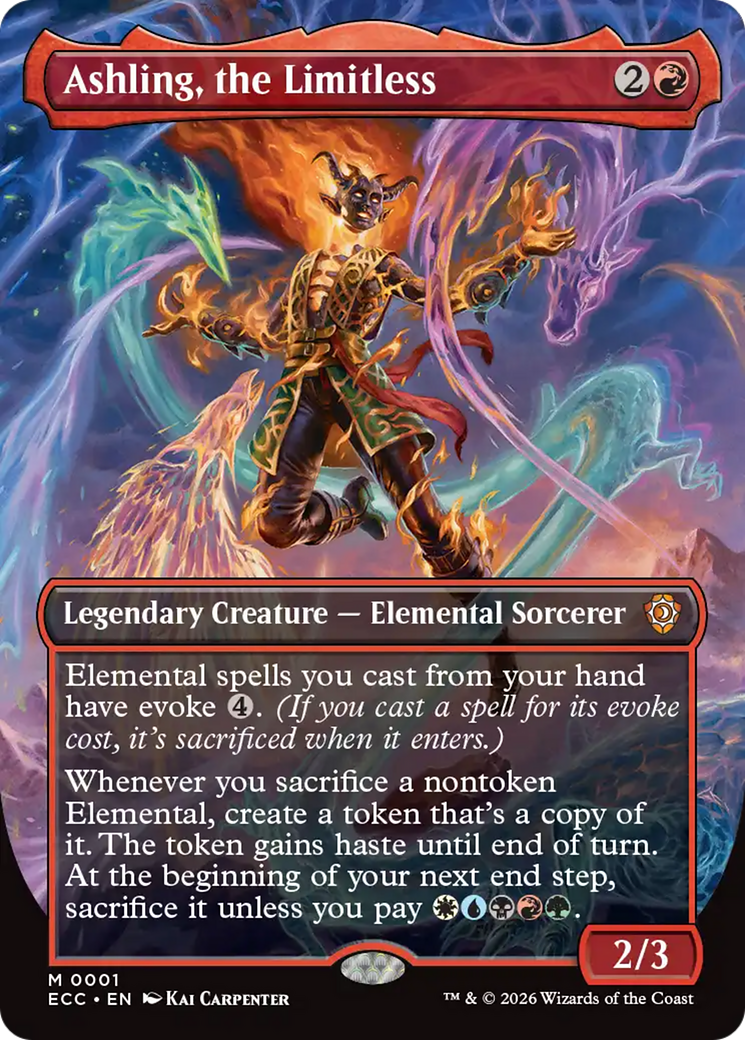
Ashling, the Limitless, seen here one-upping Avatar Aang by bending dragons instead of elements, doesn’t fool me. I know a trigger doubler when I see one, and this firebrand multiplies not only your Elemental ETBs but also their death triggers. It’s absolutely obscene, and she pretty much steers you directly into an aristocrats-focused Elementals deck.
Trust me: like a business executive in the Cayman Islands, Ashling players aren’t paying their taxes. Why would they, when that ridiculous 



 ransom is borderline extortionate and denies them that second death trigger? No, they’re turbo-Mulldrifting and re-watching Avengers: Infinity Spores until their opponents collapse from sheer Elemental ETB value. If an Ashling player ever resolves Rumbleweed, you might as well resign and take up a less stressful hobby, like skydiving without a parachute.
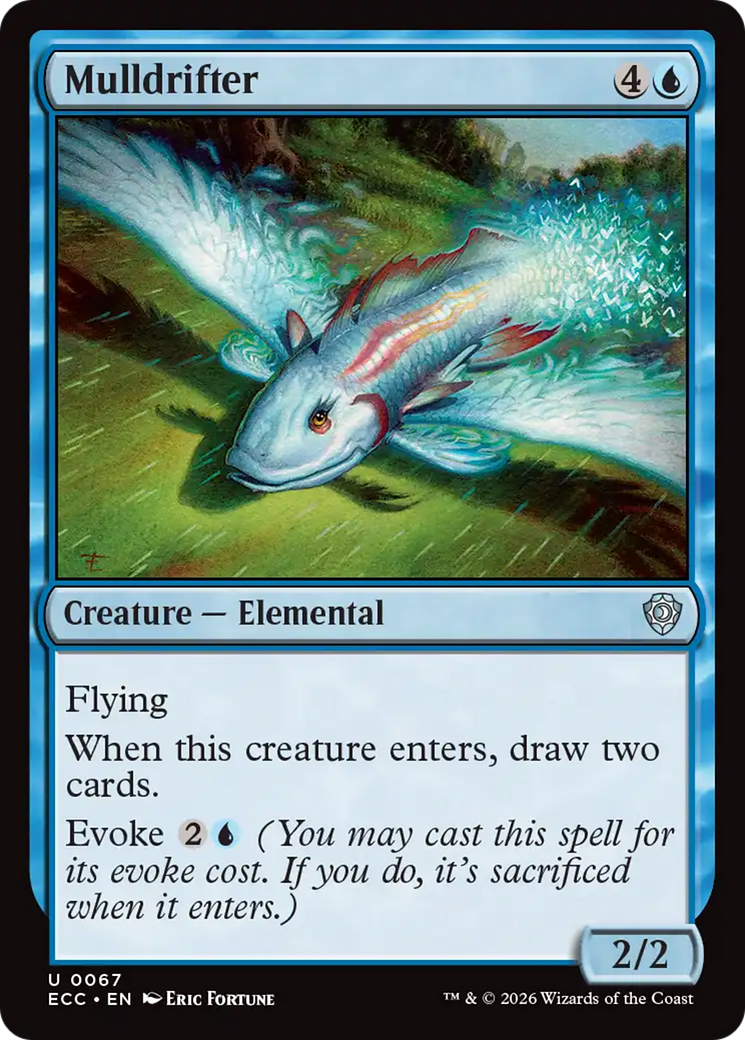
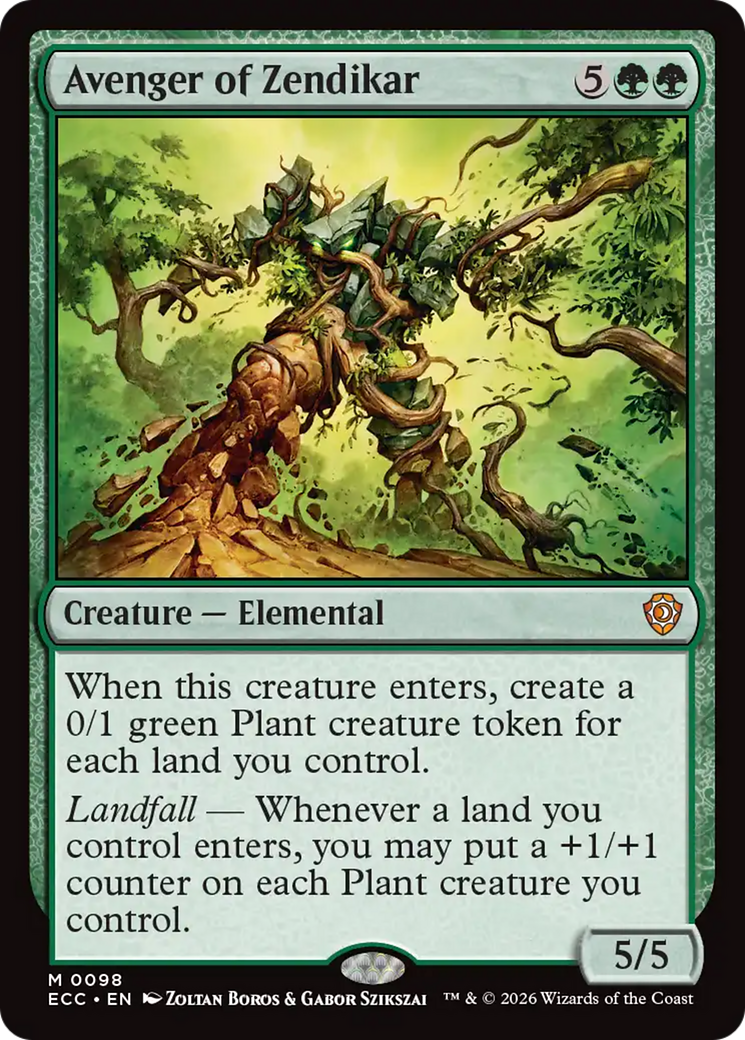
Still, she’s got a bit more to her than just value vomit. Ashling gives Elemental spells you cast from your hand evoke  , and that’s a purely colorless casting cost. If there’s one thing that Kentaro, the Smiling Cat has taught me, it’s that Magic players will go out of their way to reduce colorless costs to
  , no matter how many cost reducers it takes. I’m tempted to build a completely colorless Ashling list just to see if I can.

Believe it or not, you can also use mutate to get around Ashling’s nontoken restriction. Evoke an Elemental, let it die, and then mutate a creature onto the token copy so it’s no longer a token. You’d think you’d need some form of Arcane Adaptation effect to get away with this in general, but guess what: a surprising amount of mutators are actually already Elementals. If nothing else, at least include a copy of Brokkos, Apex of Forever, since the thought of a never-ending Titan of Industry tickles me.
Auntie Ool, Cursewretch
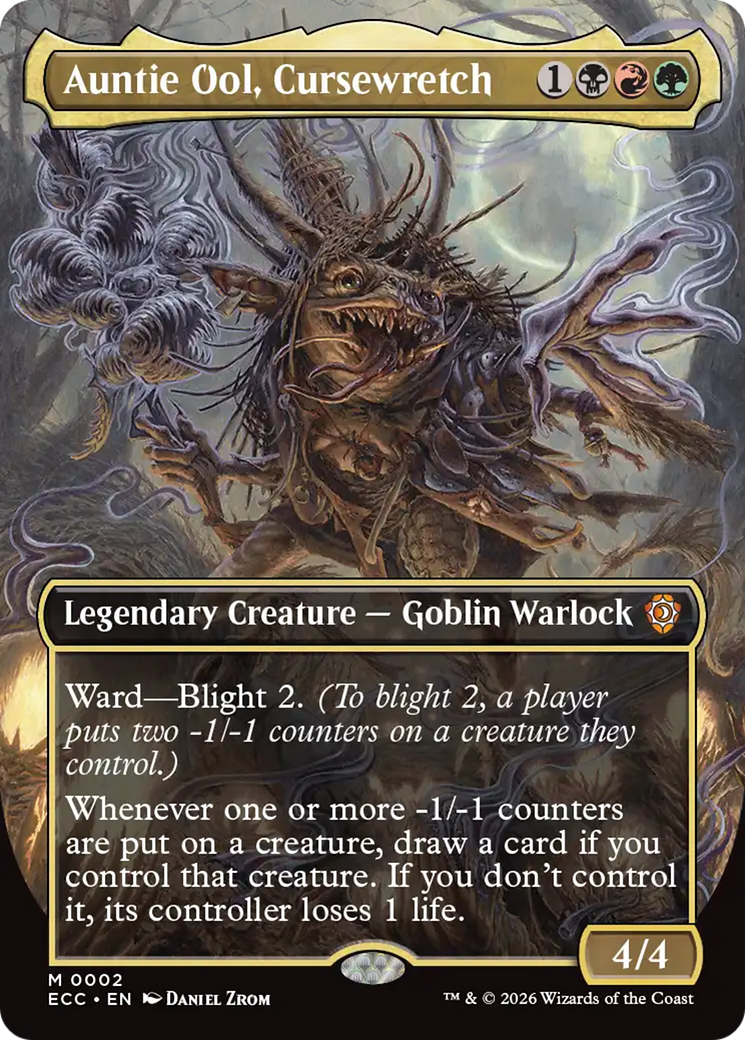
Auntie Ool, Cursewretch sure is the Jund -1/-1 counter commander that everyone was hoping for. Unfortunately, it seems that the phrase “what everyone was hoping for” here just means value-slop.
Look, I understand the demand for a variant of this strategy — in particular, it makes wither a lot more playable — but Wizards didn’t need to tack on the “oh, also, Black Sun's Zenith now draws you five cards for  .”
.”
You’re just gonna fill your deck up with cards that put -1/-1 counters on everything, cards that generate their own -1/-1 counters, or cards that do both, only to negate the downside of weakening your own creatures with counter removers like Hex Parasite (or the outstandingly busted Luxior, Giada's Gift). The deck basically builds itself.
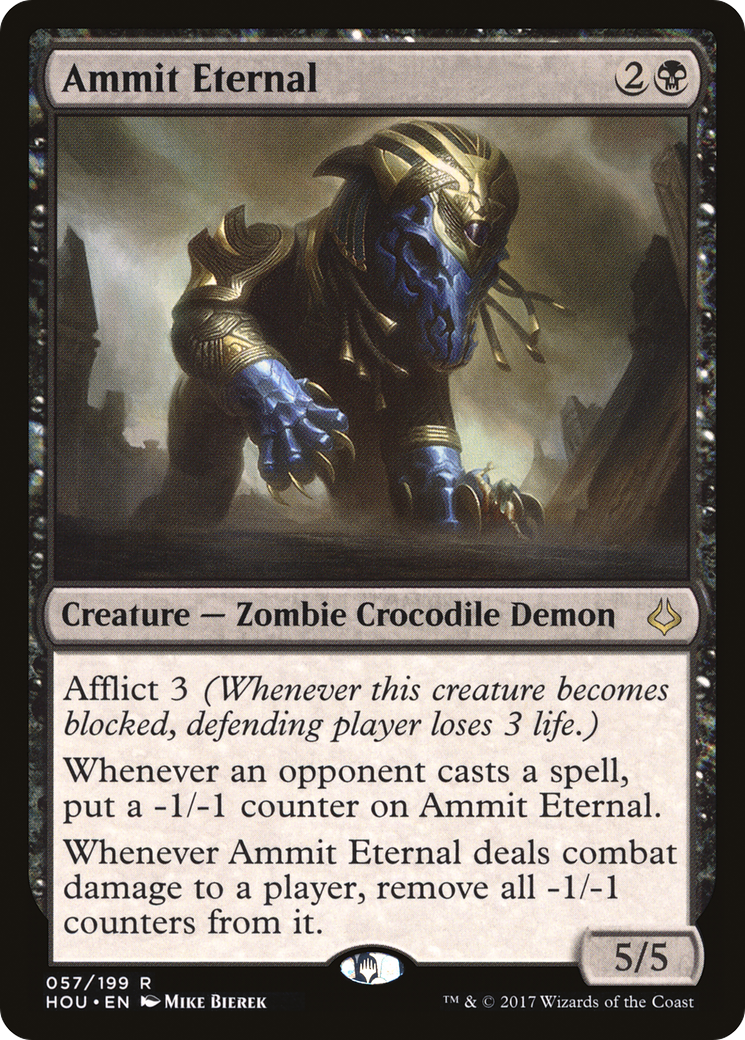
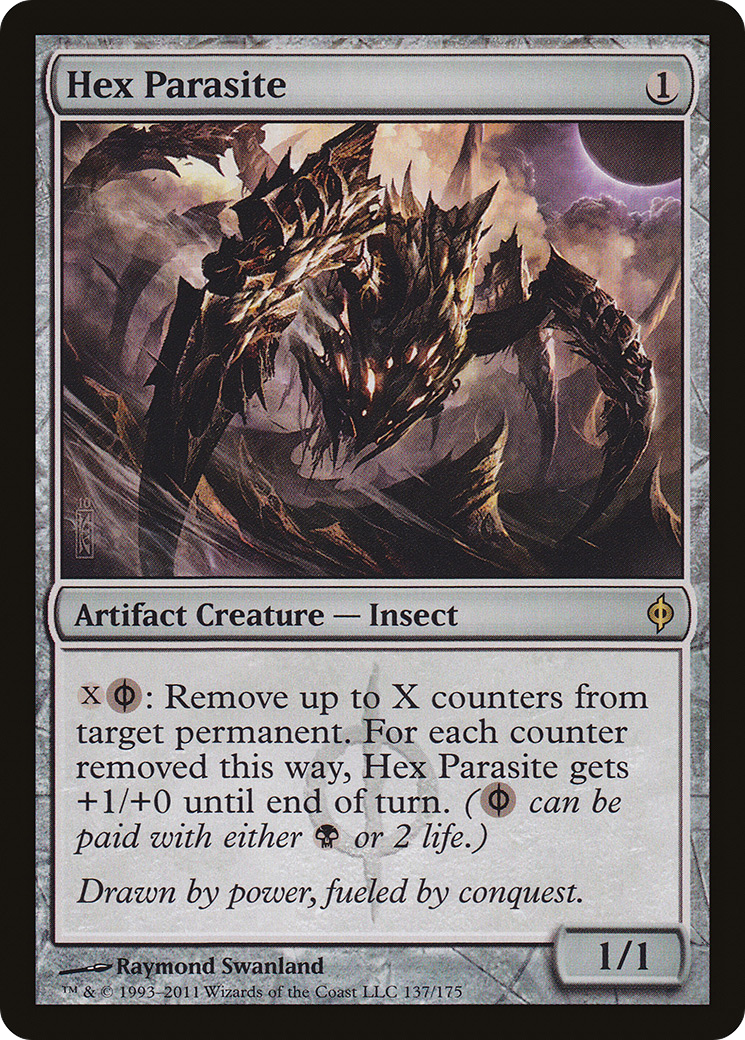
Just about the only entertaining thing I can think of when it comes to this commander is that you can pull the prank of rolling up to the local game store with two of your buddies and three of these decks in tow. Auntie Ool doesn’t actually care who puts the -1/-1 counters on creatures, so with three Ools on the field, your poor, unsuspecting victim loses thrice the life every time one of their dudes gets dinged. That’s objectively hilarious.
Oh, and I guess you can also remove an opponent’s board in response to Auntie Ool, Cursewretch‘s ward trigger to stop them from paying the cost, too.
Mass of Mysteries
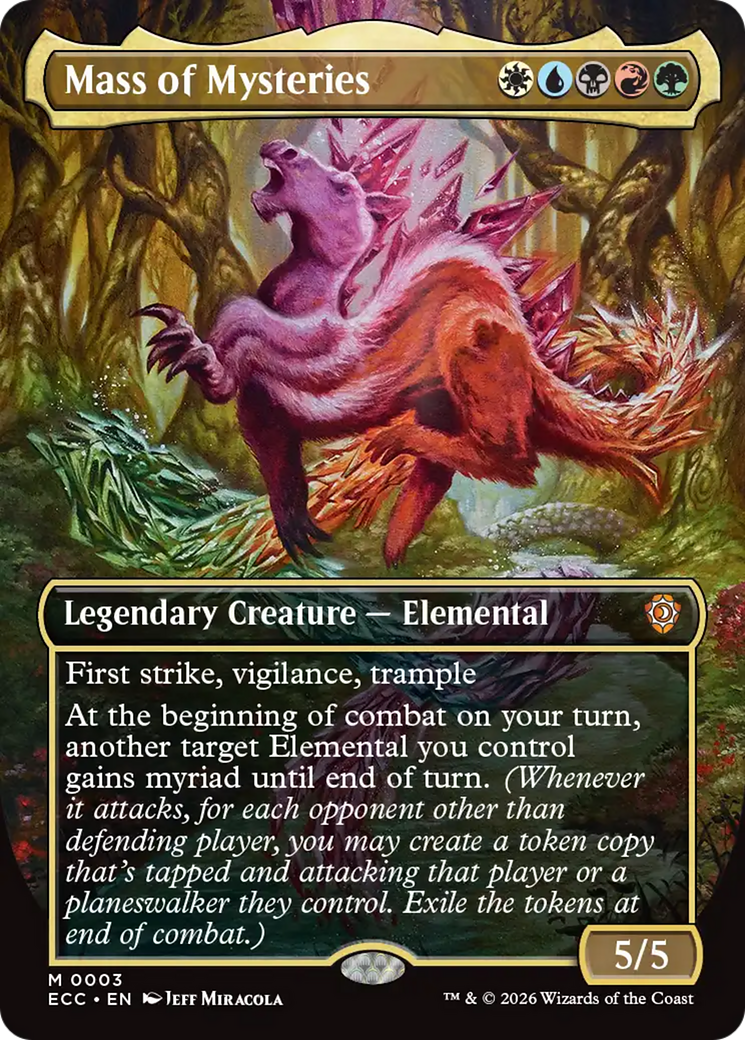
This honse of a precon secondary reminds me of the time I said that Duke Ulder Ravengard would be the most popular commander from Commander Legends: Battle for Baldur’s Gate. That’s why I’m not too keen on Mass of Mysteries, partially because I don’t like being reminded of how fucking wrong I was, but mostly because I don’t understand what this gets you over the Boros version.

Sure, five colors is always a bonus, and being limited to Elementals really is just a formality around here, but I can’t see these decks being anything deeper than “find the most broken ETBs or fattest guys imaginable.” If I had to build it, then multiple combats seem like a plus here, since that additional myriad lasts until the end of turn and you can stack them onto one creature.
The Reaper, King No More
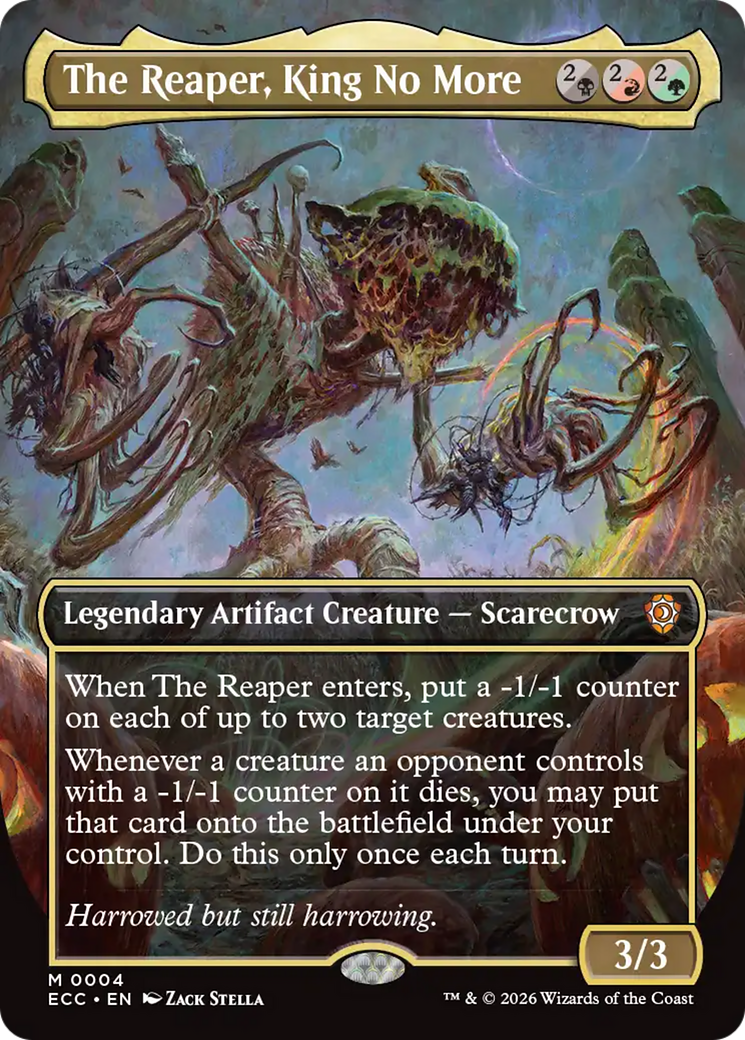
The Reaper, King No More tasks you with the most horrifying quest imaginable: play subpar removal. I understand if you need a second to clean up your vomit.
The Reaper’s intended play pattern seems to be tagging creatures with -1/-1 counters and then killing them through other means. As an example, magine going to combat, casting Scar after blockers, and then letting combat damage do the rest.

The tension comes from the fact that the actual power of the -1/-1 counter strategy lies in the cards that spread them among a ton of creatures at once, so it’s going to be tough to knock out the specific creature you want to steal without closing yourself off to other opportunities in the future.
I think the amount of fun you’ll have with The Reaper, King No More depends on what types of decks your opponents bring to the table. If you play the way Wizards intended, you actually want to fight against Big Stompy, since you’ll mark an enemy for death and then Murder them to steal them. On the other hand, if your opponents all play synergistic value piles, you’re gonna have to pick on one person to get a coherent strategy going, and that sucks.
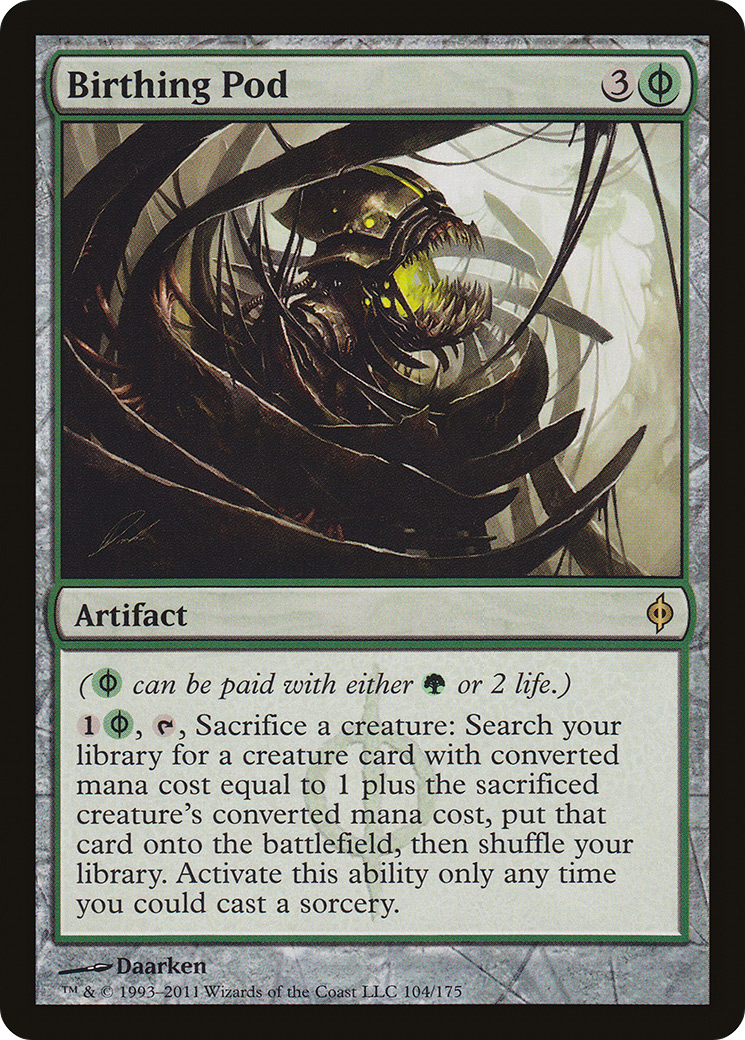
A user on Reddit also pointed me towards the fact that, despite costing only three to cast, The Reaper, King No More actually has a mana value of six, since the each of the symbols in the 

 casting cost contribute two each. That means you can, for example, Birthing Pod them for a seven drop.
Other great hits include Morbid Curiosity to draw six cards, or Broadside Bombardiers to deal eight damage. I don’t think it’s a very consistent strategy, but it is an intriguing one, and (at the very least) it reveals a good well of cards to draw from when building your deck.
Ferrafor, Young Yew
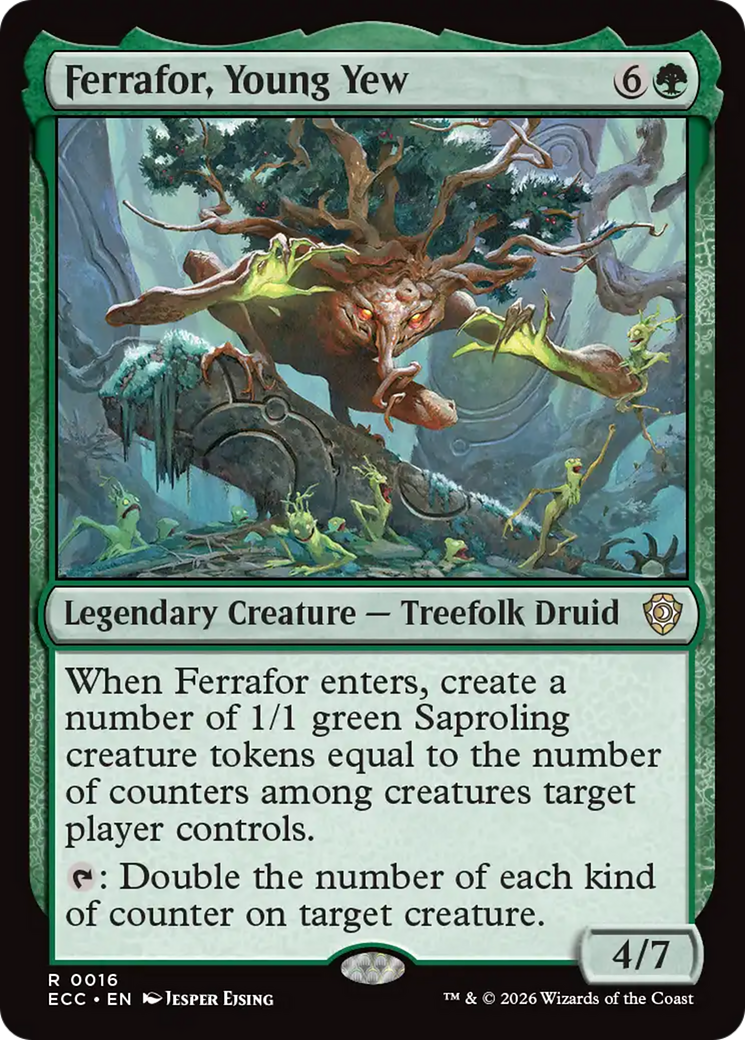
Ferrafor, Young Yew doesn’t care about any one, specific type of counter, so they’re this set’s backdoor Spacecraft commander. You can repeatedly station a Spacecraft far past its intended maximum to create enough charge counters for a big token jamboree. Just make sure it’s actually a creature before you cast Ferrafor, Young Yew, or your effors will be wasted.
Alternatively, if you wanna be a dick about it, you could generate infinite mana, pour it into an  -cost Hydra, and then cast Ferrafor for infinite creatures. But that’s no fun.
Brigid, Clachan's Heart // Brigid, Doun's Mind
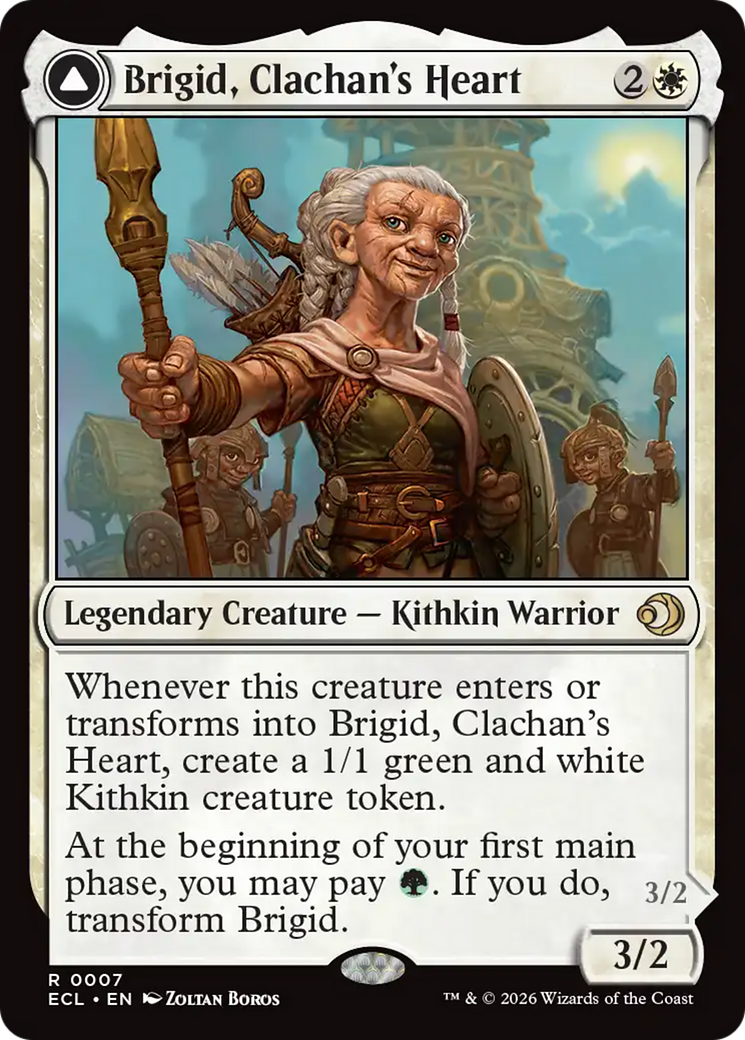
Allow me to introduce you to Lorwyn Eclipsed’s cycle of flip commanders. You can transform these creatures between their Lorwyn and Shadowmoor counterparts at the beginning of your first main phase by paying one mana of the other side’s color.
In this example, Brigid, Clachan’s Heart enters, creates a Kithkin, and then you pay to flip her into Brigid, Doun’s Mind and never flip her back because giving up Gaea's Cradle would be insane.2
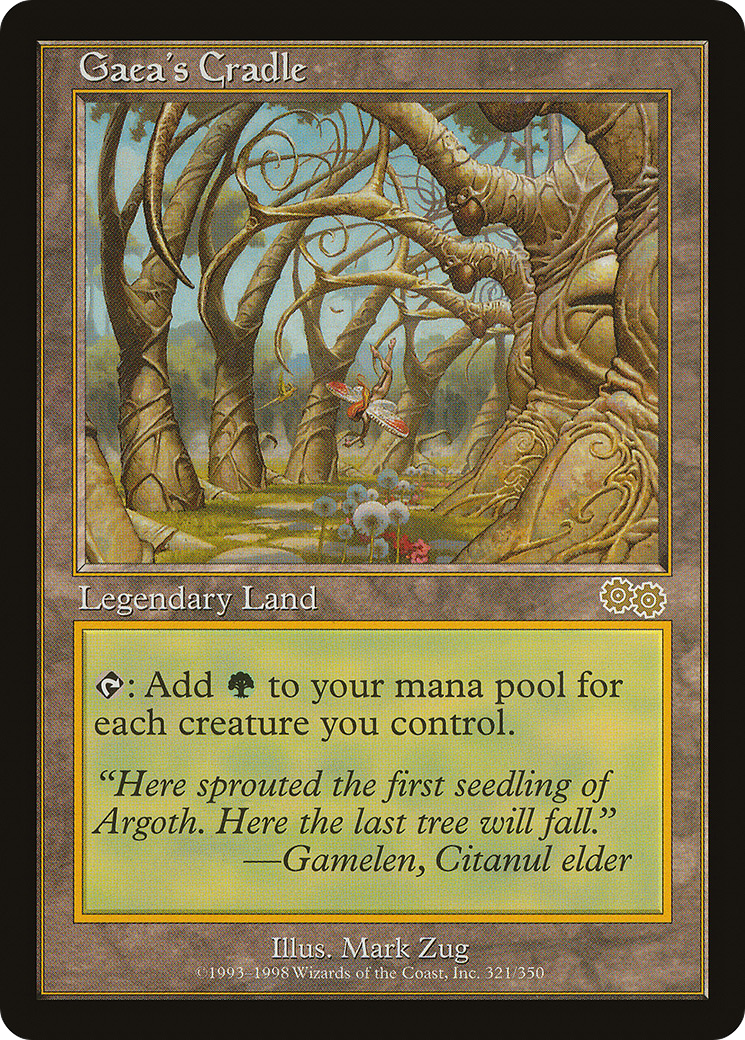
Your best bet here would be a spend- -to-make-X-creatures typal; you know, the type of deck that loves March of the Multitudes. Each one you cast makes the next one that much stronger, especially if you can double up on the mana production by adding cards like Cryptolith Rite to the mix.
In terms of intrigue, though, I’m less impressed. Gaea's Cradle in the command zone is definitely open-ended, but I need a bit more structure in my commanders to call them interesting.
Eirdu, Carrier of Dawn // Isilu, Carrier of Twilight
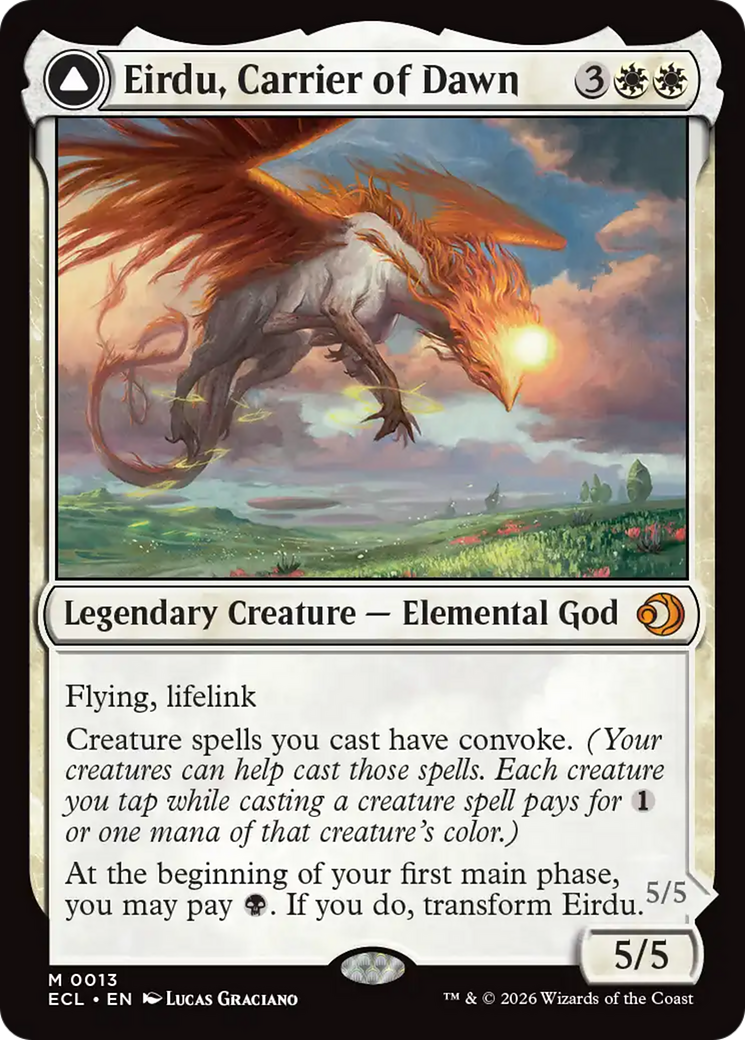
Eirdu and Isilu were among the first cards spoiled for this set, and of those two, Isilu got the lion’s share of the attention. Giving every other nontoken creature on your board persist is obviously ridiculous, and it goes infinite with a sac outlet and practically any card that gives creatures a +1/+1 counter when they enter.
But persist loops are played out. I’m actually more interested in Eirdu, and that’s because I don’t think there’s been a very good Survival commander yet. Of course, you’d need the Selesnya color identity to truly get there, but Eirdu is a good start.
And of course, I’m not ignoring that these two are giant, flying lifelinkers either. I’m not super interested in seeing these guys in the zone, but as a role-player in, say, Betor, Ancestor's Voice, absolutely.
Rhys, the Evermore
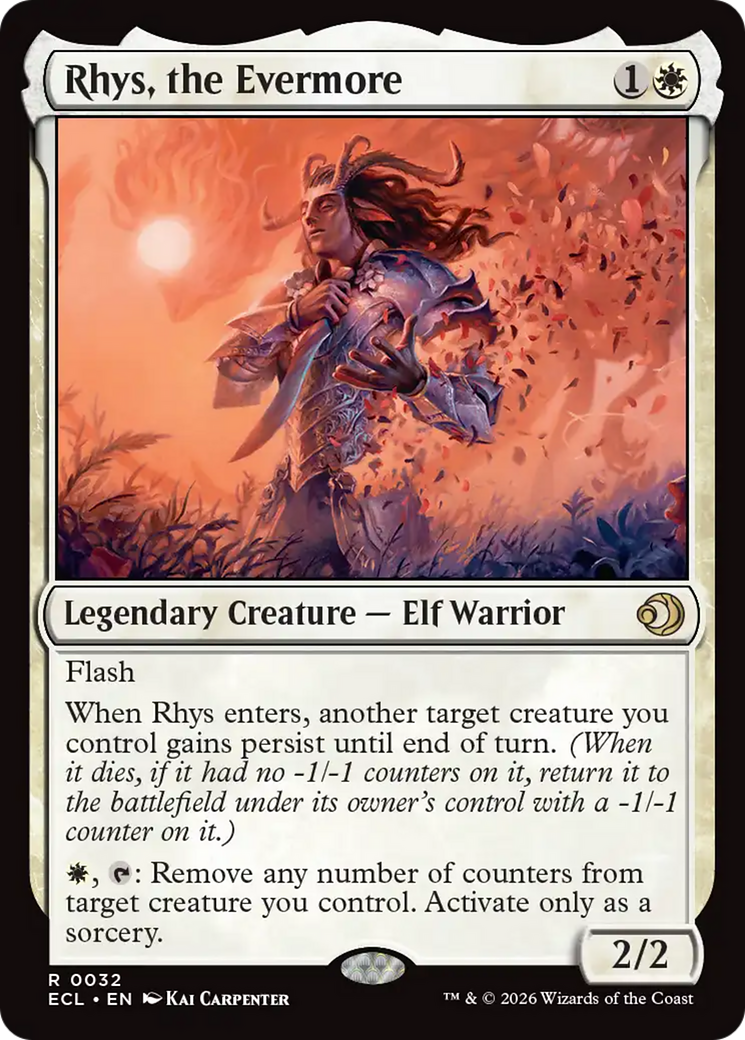
Rhys, seen here reenacting the famous fromage from the 2025 Game of the Year Clair de Lune: Expedition 6-7, pretty much solely wants to play Lost Auramancers, or maybe animated Sagas. Perhaps a deck of those Saga-creatures from Final Fantasy?
Honestly, I’d be way more enthusiastic if he could kill counters off any permanent type, but restricting him to just creatures in such a narrow color identity does him absolutely no favors.
Sygg, Wanderwine Wisdom // Sygg, Wanderbrine Shield
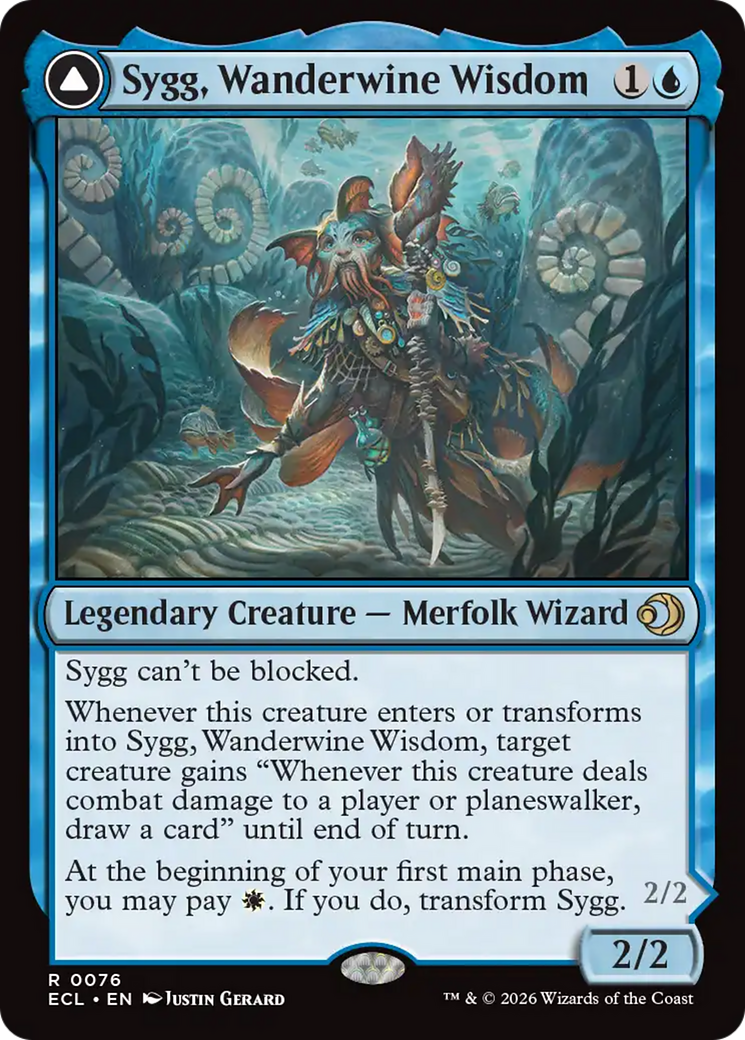
As far as I can tell, Sygg is just an unblockable 2/2 that excels at carrying Equipment to an opponent’s face. When am I gonna get the repeatable “protection from everything” card that’s not limited to just creatures I control? I want to Mother of Runes the goddamn Bruna, Wizards!
Grub, Storied Matriarch // Grub, Notorious Auntie
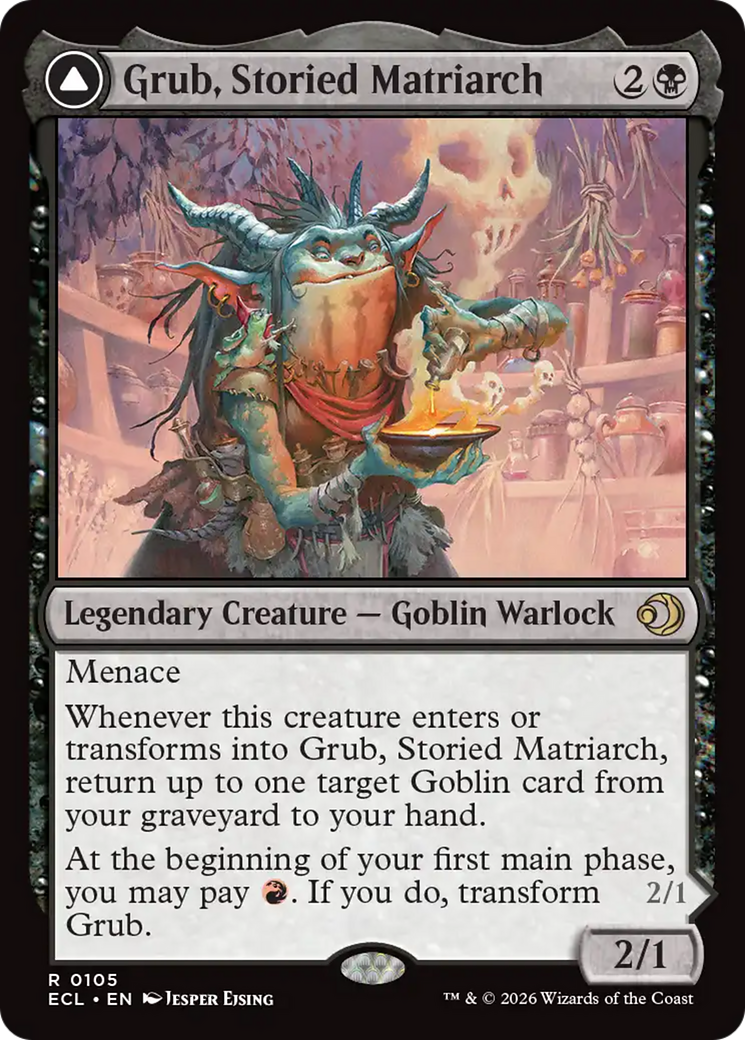
If Wort, Boggart Auntie and Calamity, Galloping Inferno had a baby, then why hasn’t Furaffinity told me about it yet Grub would be that baby. She’s not as good at either role as her parents are, but if you want to play Goblins for fun and not just to bowl people over, then she’s a good mashup of the two archetypes.
Ashling, Rekindled // Ashling, Rimebound
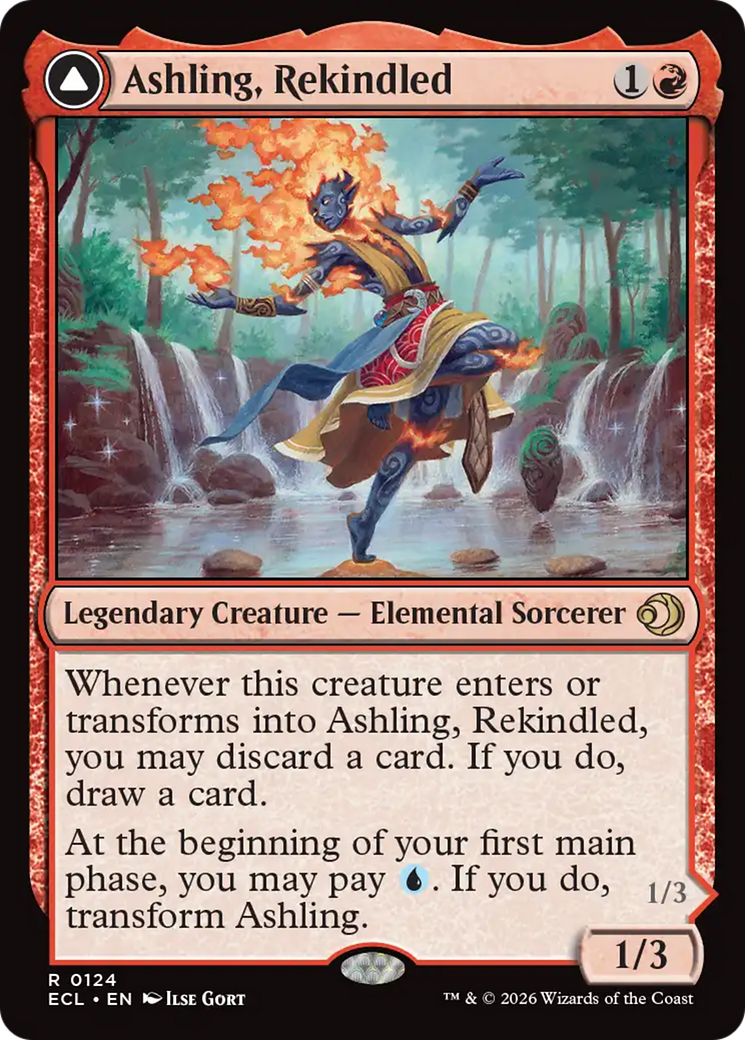
Like Brigid, Clachan’s Heart, Ashling, Rekindled is destined to spend most of her life on her back. Wait, that sounded inappropriate; let me rephrase that.
Like Gwendlyn Di Corci, Ashling, Rekindled is destined to spend most of her life on her back. Once you transform her into Ashling, Rimebound, you get a free two mana per turn to spend on any spell of your choice, provided that it costs four or more mana.
So, you’re basically running a mana rock in the command zone. Granted, it’s a good mana rock, with potential card filtering synergy, and you can curve well into four-mana ramp like Thran Dynamo. Still, I just can’t help but think: “This is very mechanically different from just running The Emperor, because—”
Trystan, Callous Cultivator // Trystan, Penitent Culler
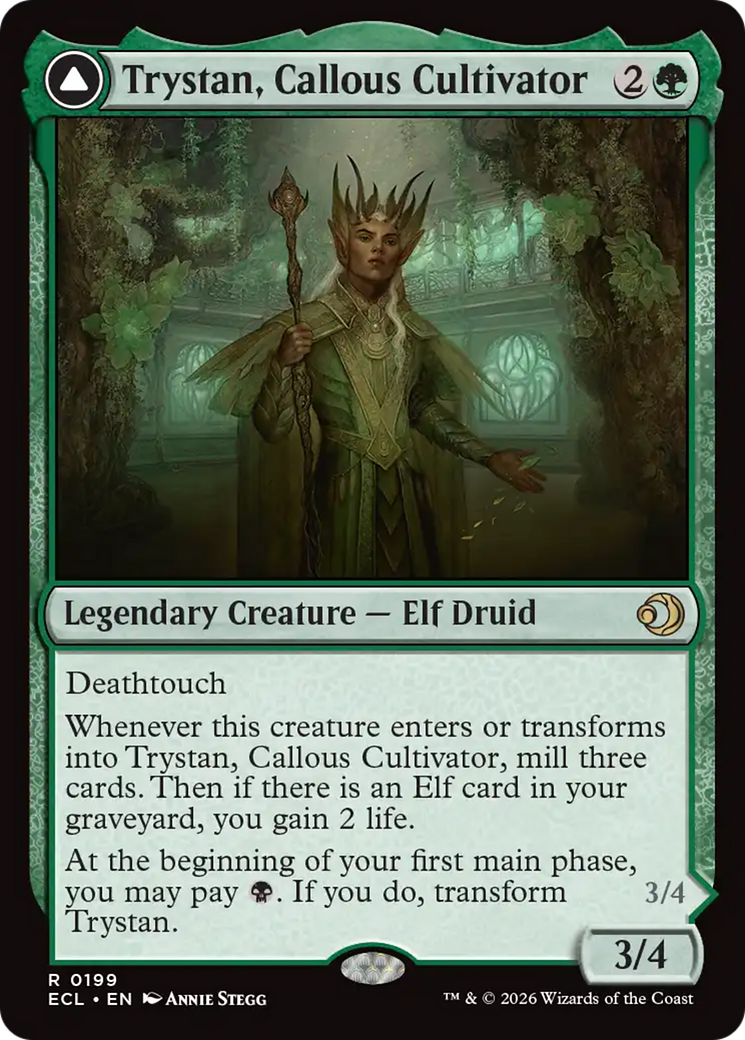
Trystan’s Elf-graveyard cross-synergy is a red herring; there’s far better commanders for that kind of thing.
No, he’s best used as a repeatable Stitcher's Supplier for one mana per turn — and that’s surprisingly unique. A lot of self-mill commanders require you to attack with them to get their triggers, and Trystan lets you chicken out as much as you want. Finally, a graveyard deck for cowards like me!
Abigale, Eloquent First-Year
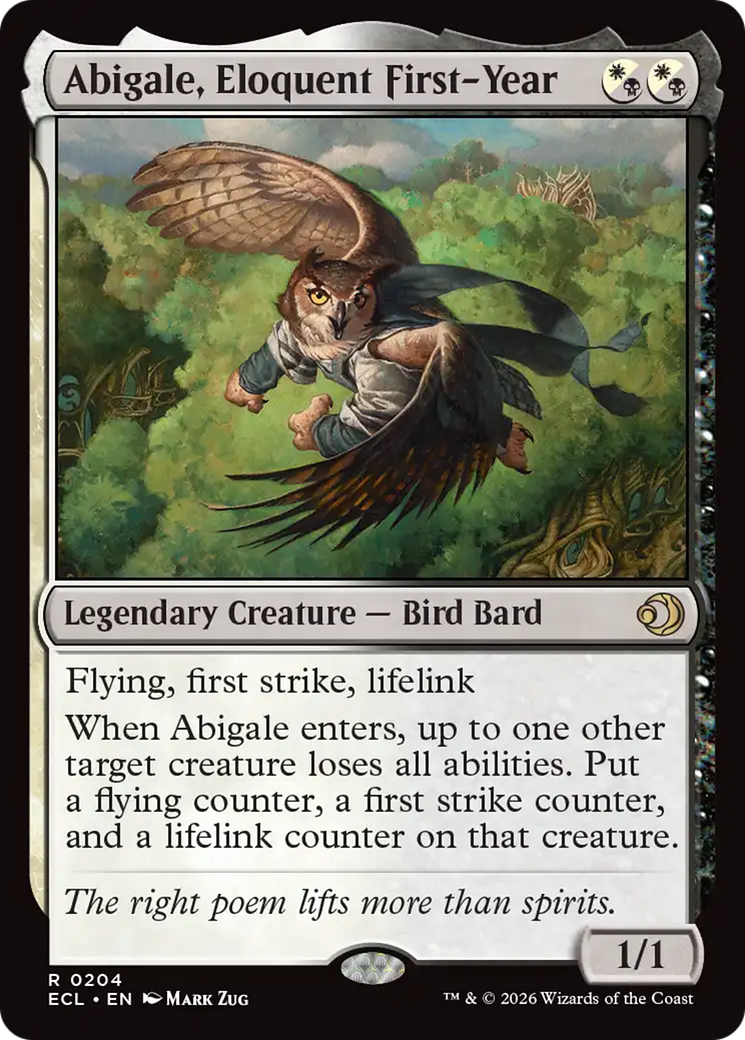
Abigale, Eloquent First-Year is comparable to Xu-Ifit, Osteoharmonist, with the caveat that the enters-the-battlefield trigger isn’t as easily repeatable, and you need your target creature in play first.

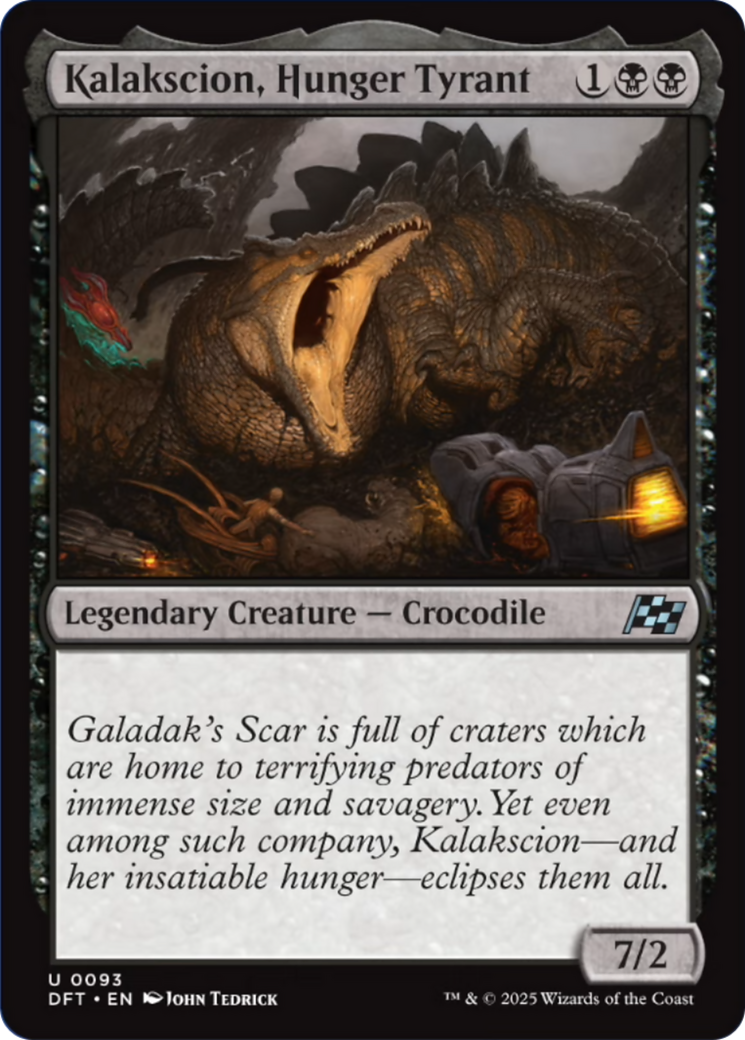
On the other hand, flying, first-strike, and lifelink? That’s a lot, and I’m excited to dome people with an evasive, first-striking, lifelinking Kalakscion.
I’d be remiss if I didn’t mention the one advantage Abigale has over Xu-Ifit, and that’s the category of cards with powerful enters triggers that are undone by their death triggers. Abigale “locks-in” those push-your luck cards.
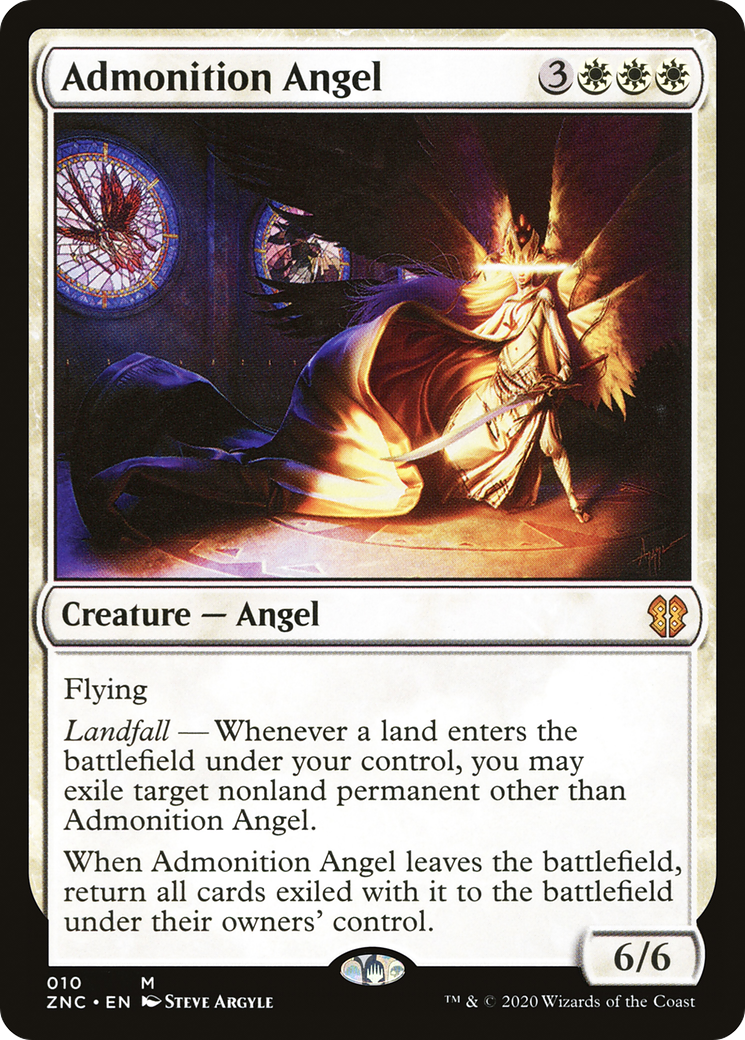
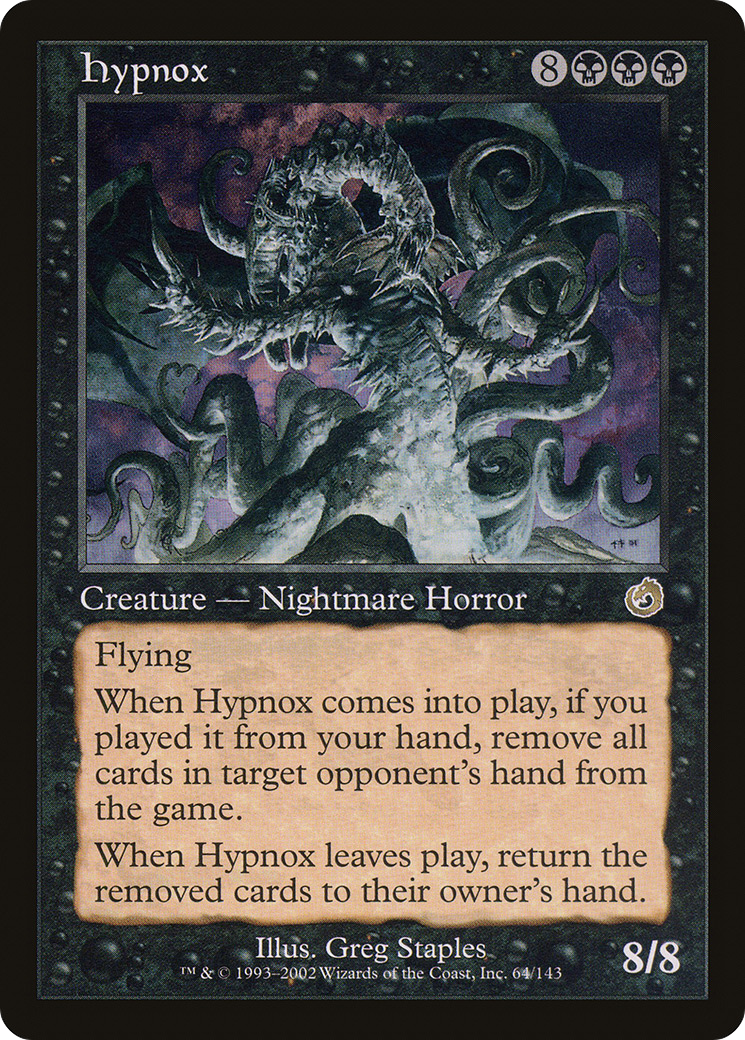
For example, you can Abigale an Admonition Angel to seal its victims away forever, or let Hypnox keep your opponent’s hand away from them even if it dies. Unfortunately, most new Oblivion Ring-esque cards are now worded in such a way that it doesn’t work, but that doesn’t mean the old cards aren’t still there!
Kirol, Attentive First-Year
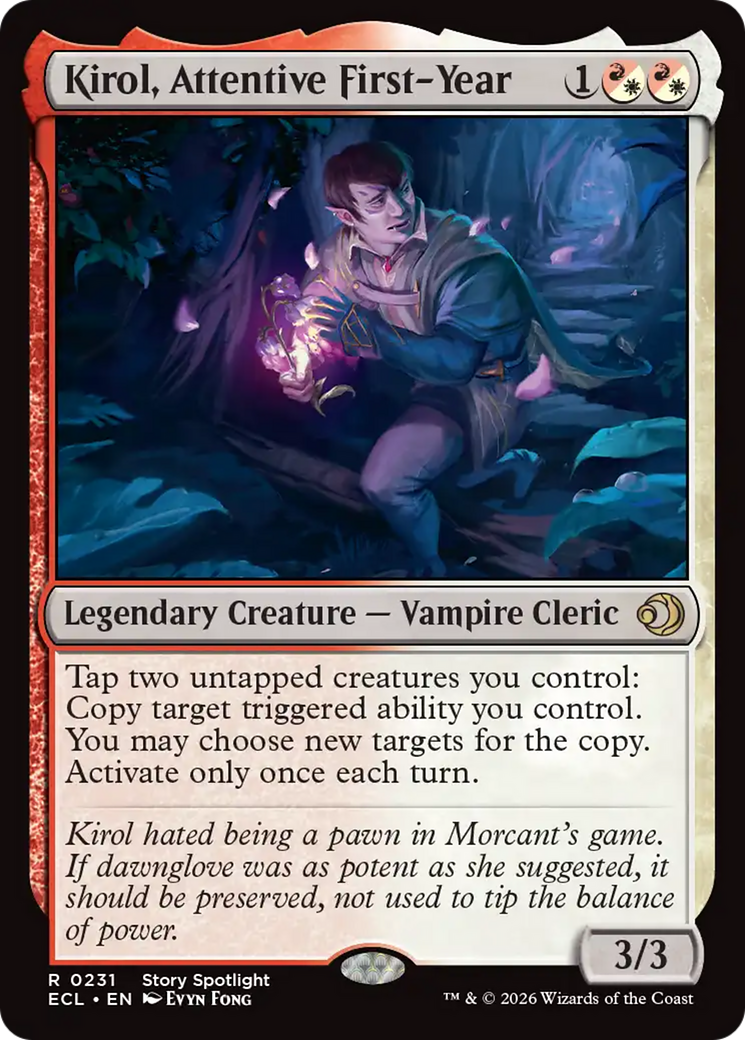
Thank my lord and savior Nicol Bolas that Kirol, Attentive First-Year says activate only once each turn, because otherwise this deck would be an exercise in “Where’s my Village Bell-Ringer?”
There’s plenty of good triggered abilities out there to copy, like myriad or any Saga chapter, and you can always blink him to reset his once-per-turn restriction, but personally, I think Kirol is a spectacular spellslinger commander. A spectacular spellslinger commander — provided half of the spells in your deck look like this:

Yes, that is a triggered ability; it’s just, well, delayed a bit. And yes, they’re totally copyable when you cast your next instant or sorcery spell that turn. Pair this with rituals or spells that scale really well into the lategame, and you’ll run roughshod over your opponents.
Or just copy the storm trigger on Grapeshot; I’m not your dad.
High Perfect Morcant
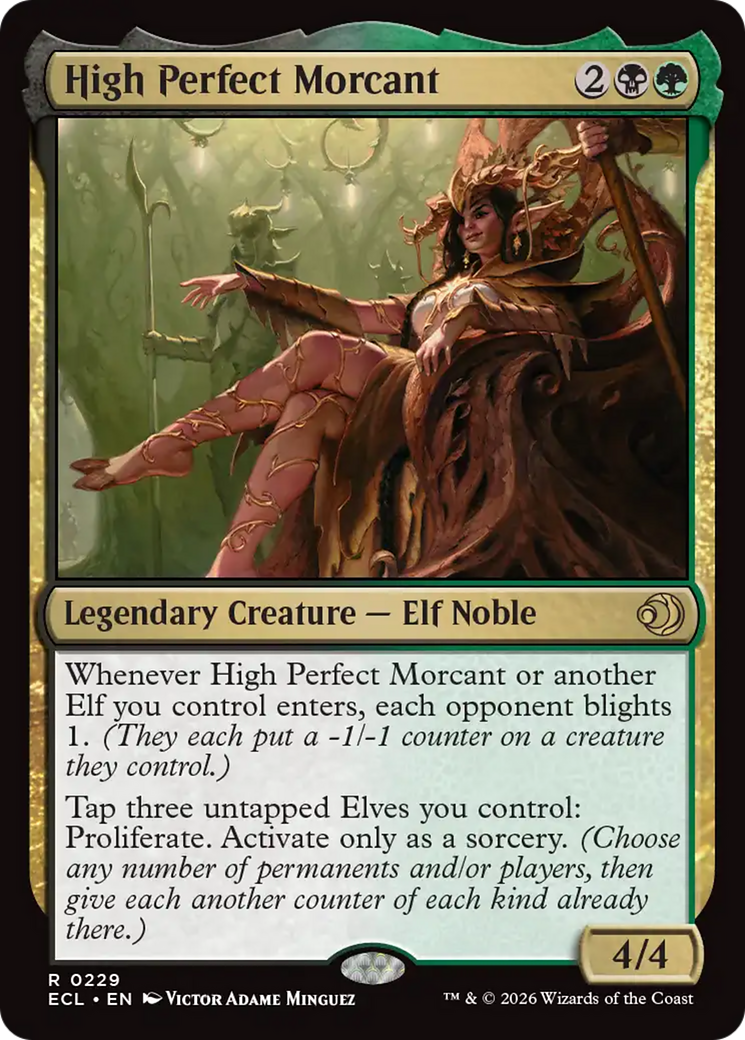
If you’re in a position to proliferate more than once per turn with High Perfect Morcant, the odds are pretty good that you can already win and you’re just playing with your food. I mean, you’re playing Elves; you don’t need to do all this wonky -1/-1 shit.
Lluwen, Imperfect Naturalist
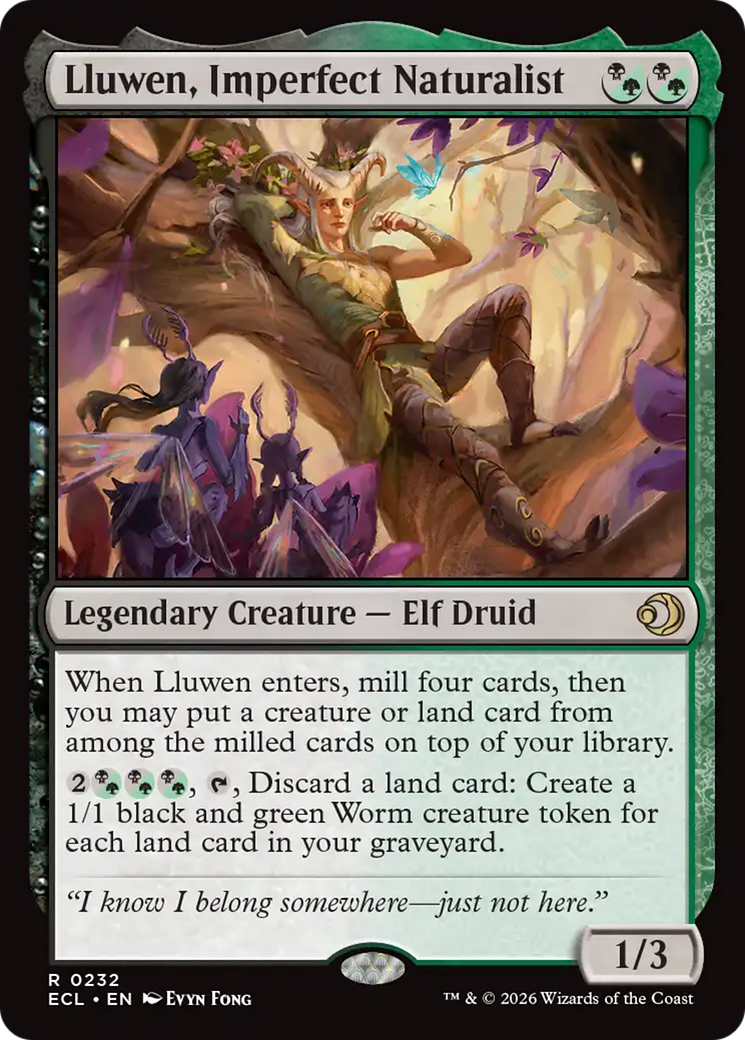
Lluwen, Imperfect Naturalist is a repeatable Worm Harvest in the command zone — which is great, if you ignore the fact that actual Worm Harvest is a repeatable Worm Harvest, and all you’d have to do to render this commander completely irrelevant is tutor Worm Harvest into your graveyard.
Bre of Clan Stoutarm
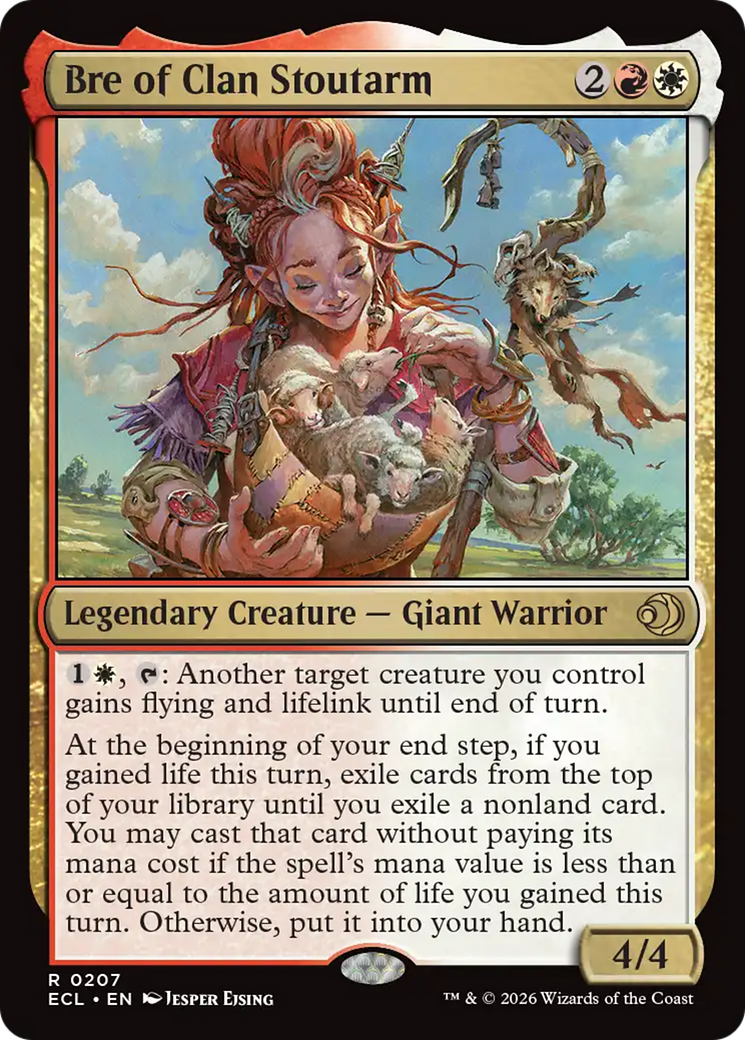
Compare this to Brion Stoutarm, although you actually have to attack with your creature-turned-projectile if you opt for Bre of Clan Stoutarm. That can run into problems like “blockers” and “creatures have summoning sickness.”
Don’t worry, though; you’re compensated for your trouble with the fact that your creature doesn’t necessarily die, and you get a nice (and frankly unnecessary) free spell as the cherry on top.
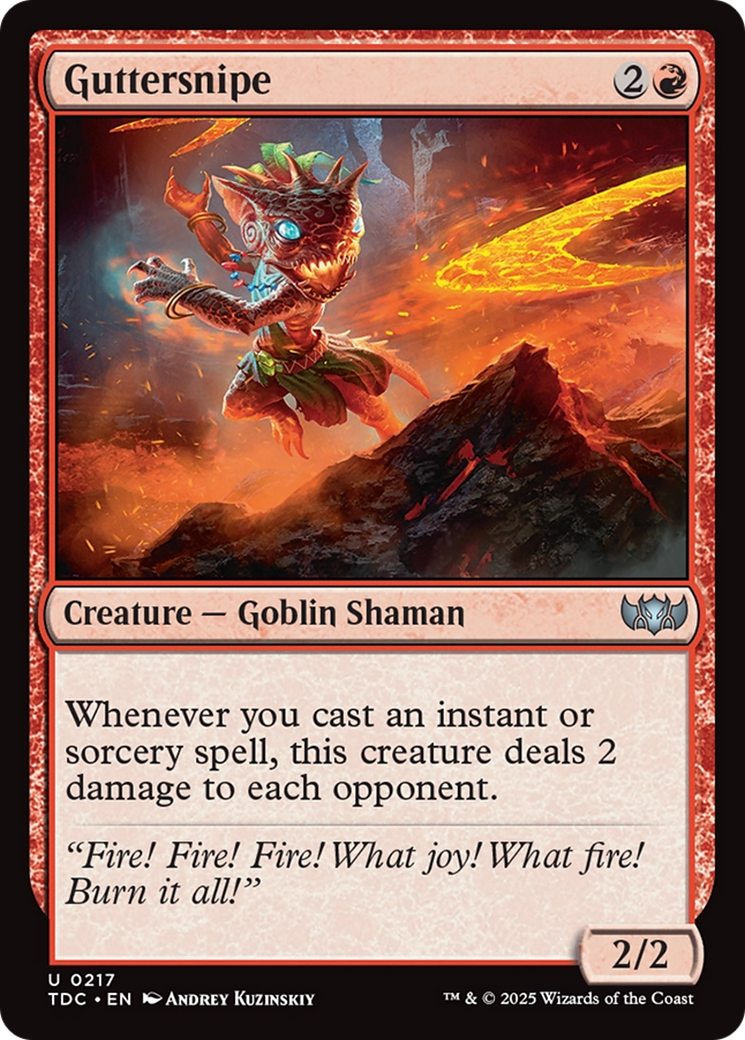
As a quality-of-life raise to Brion Stoutarm for 2026, I’m meh on Bre. As a way to give arbitrary pingers like Guttersnipe lifelink before storming off? Hell yeah! Imagine an Agate Instigator given lifelink into a Release the Dogs. That’s twelve life right there, and you have the opportunity to rip Storm Herd off the top.
Let me tell you, Lorwyn Eclipsed commanders really condition you to play one way, when the more interesting approach is in a completely different direction.
Doran, Besieged by Time
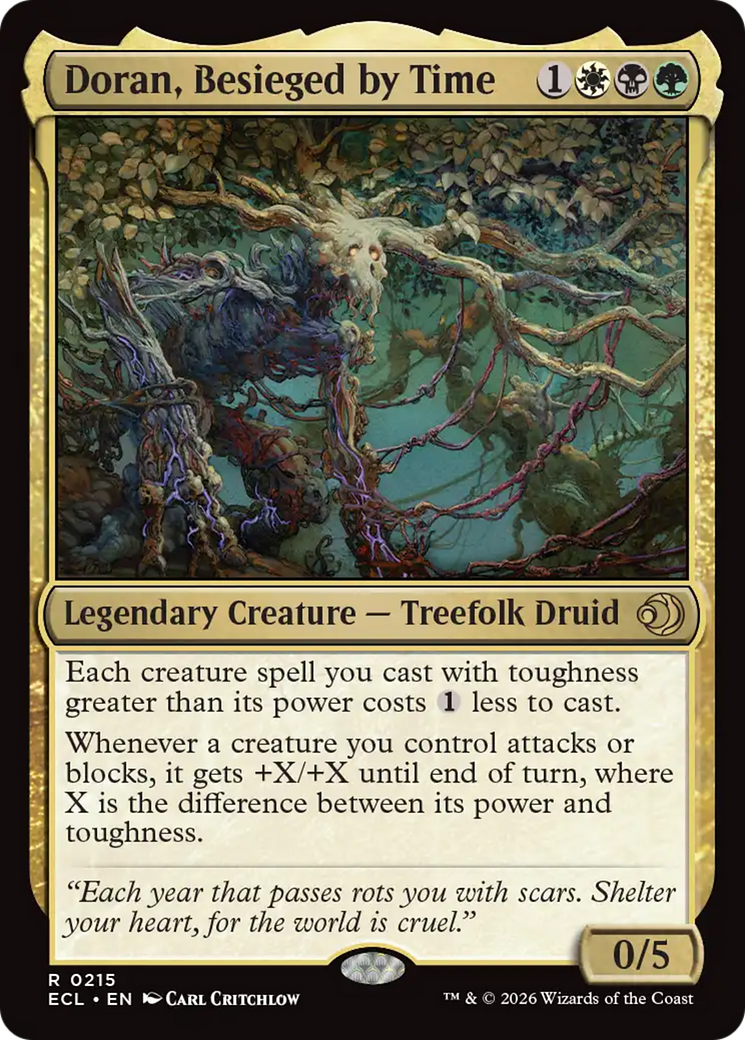
Don’t be fooled by the cost reduction; that “difference between” text works in either direction, and since Felothar the Steadfast soundly trounces this version of Doran when it comes to the higher toughness decks, I’d go headlong in the opposite direction and aim for substantially more power.
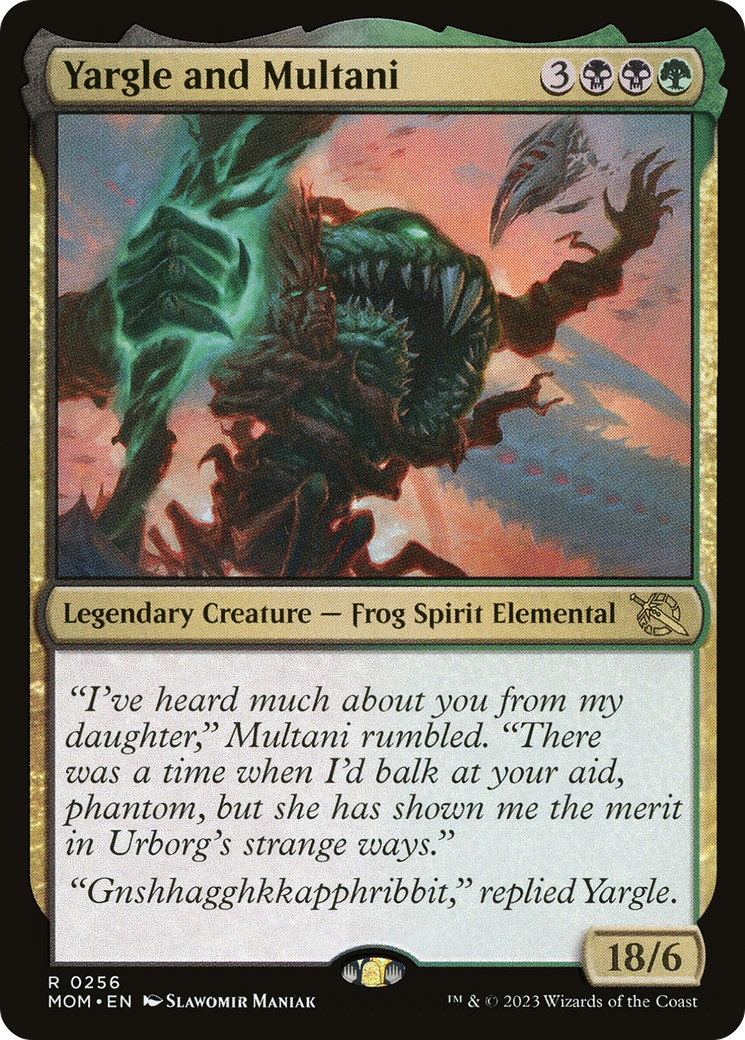
The plan is simple: play huge freaks like Yargle and Multani, swing, and then cast something like Rishkar's Expertise to draw your deck or Rite of Consumption to murder a man. This dichotomy between author intent and actual deck construction makes me smile.
Maralen, Fae Ascendant
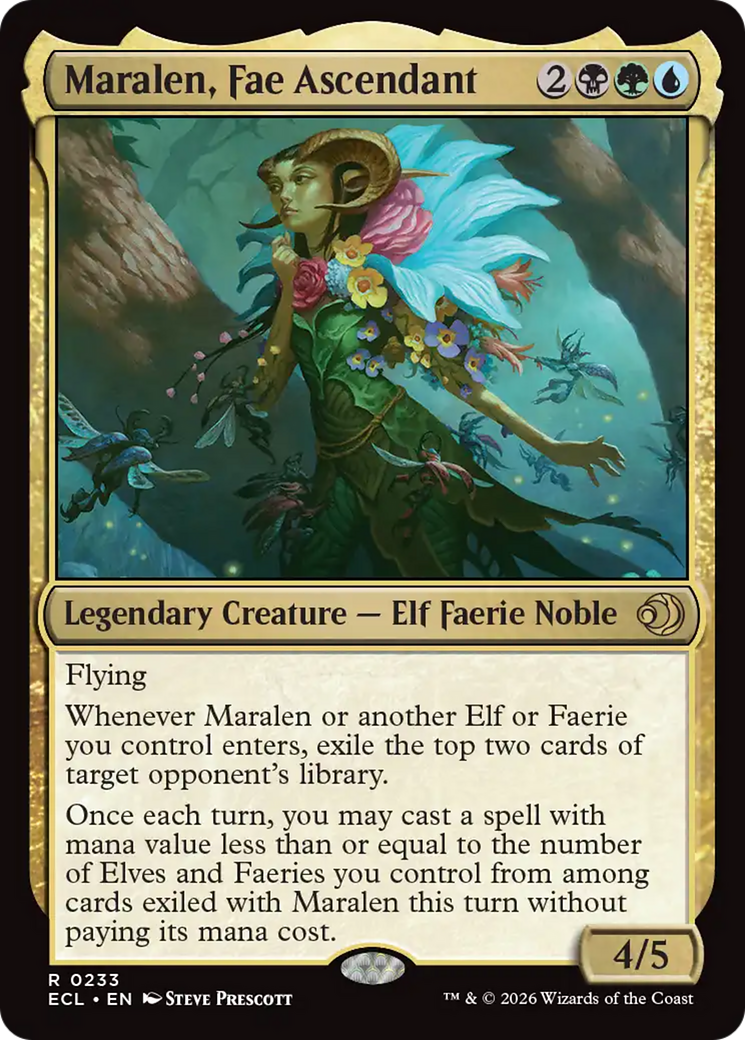
Maralen, Fae Ascendant really benefits from flash-enablers like Vedalken Orrery. You’ll ideally want to cast a free spell from your opponents on every turn, not just your own, and while Faeries are well-known for naturally having flash, Maralen does not supersede timing restrictions. If you exile anything that isn’t an instant, you’re screwed.
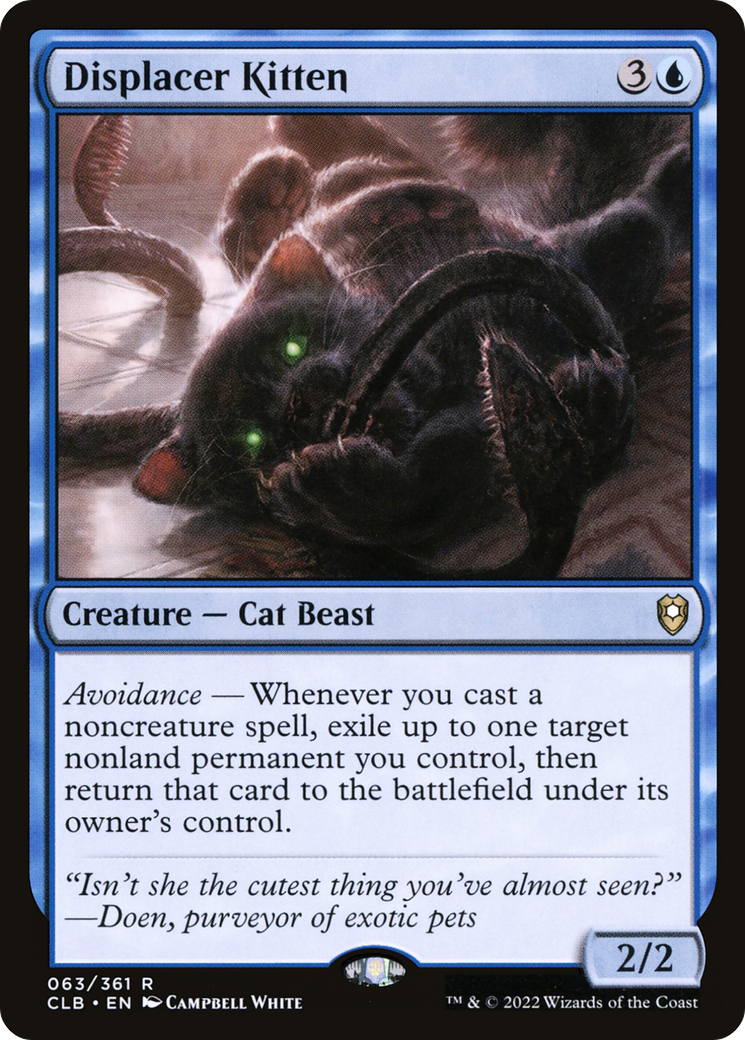
Contrary to most cards worded “once each turn,” blink effects do work to reset Maralen, since blinking her turns her into a different Maralen. You only get to pick between the cards you exiled with that specific Maralen trigger, sure, but if you keep ripping noncreature cards off the top, then Displacer Kitten goes brrrrr.
I’ve never been a big fan of theft, but Maralen appeals to me as more of a deckbuilding puzzle than an avenue for creativity. I’m really interested in optimizing this build and constructing the most well-tuned engine possible.
Sanar, Innovative First-Year
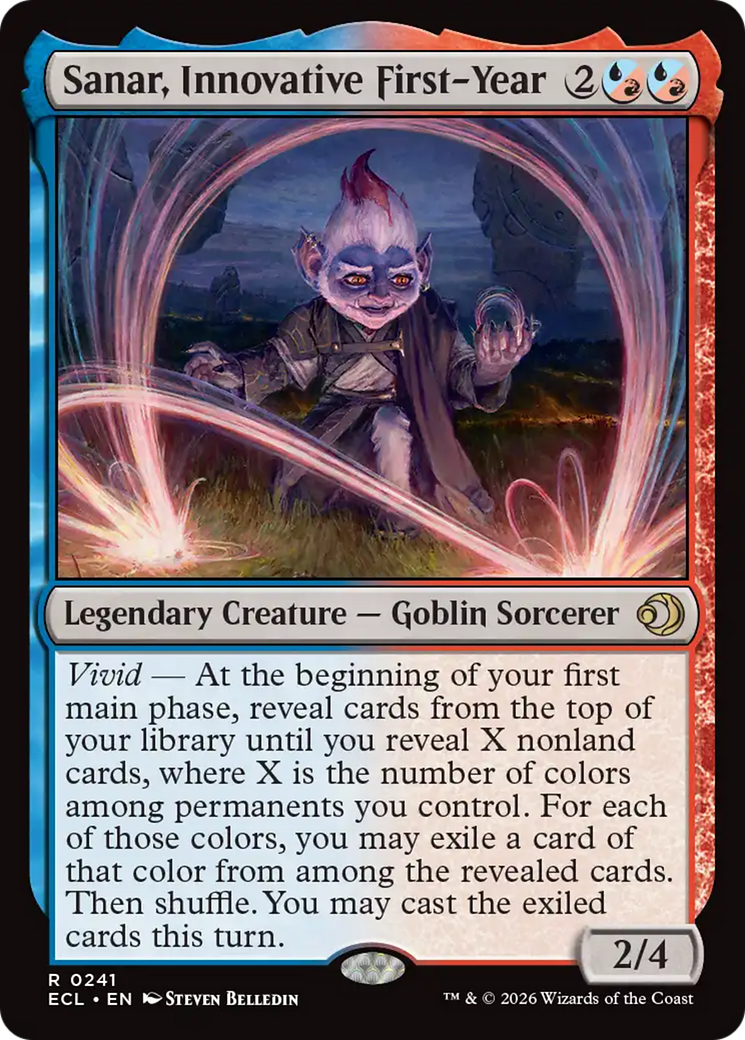
In Commander, Sanar, Innovative First-Year seems like they’d max out their own Vivid just by virtue of encompassing every color the identity can contain. It’s practically a tautology, but that doesn’t mean I’m not trying!
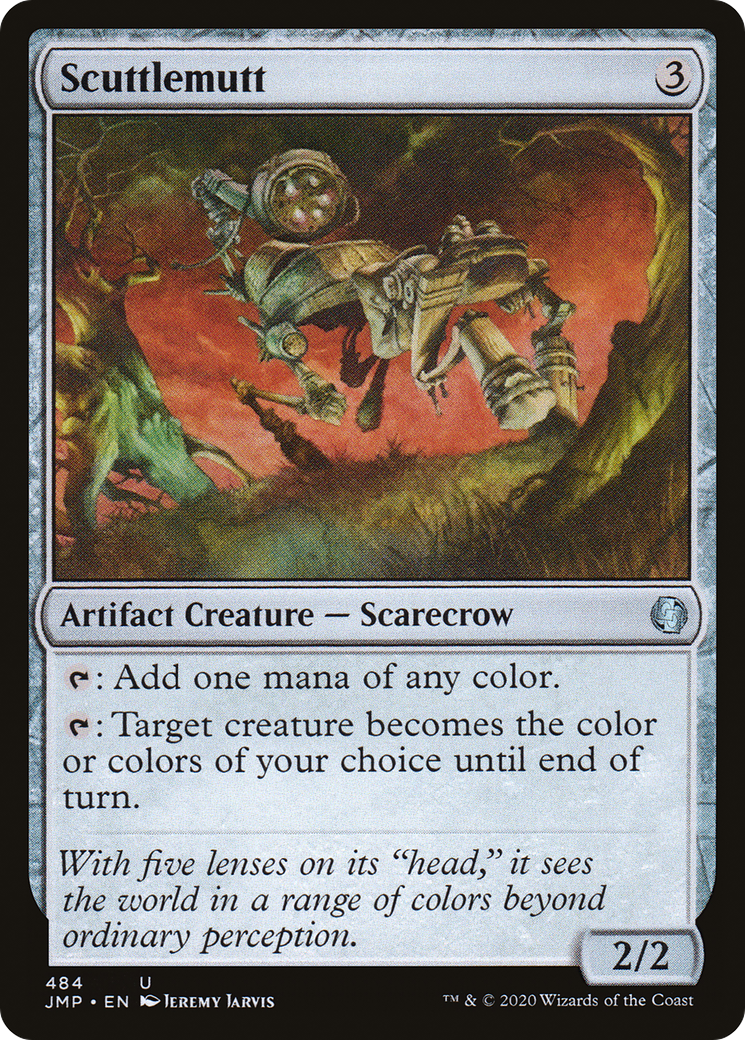
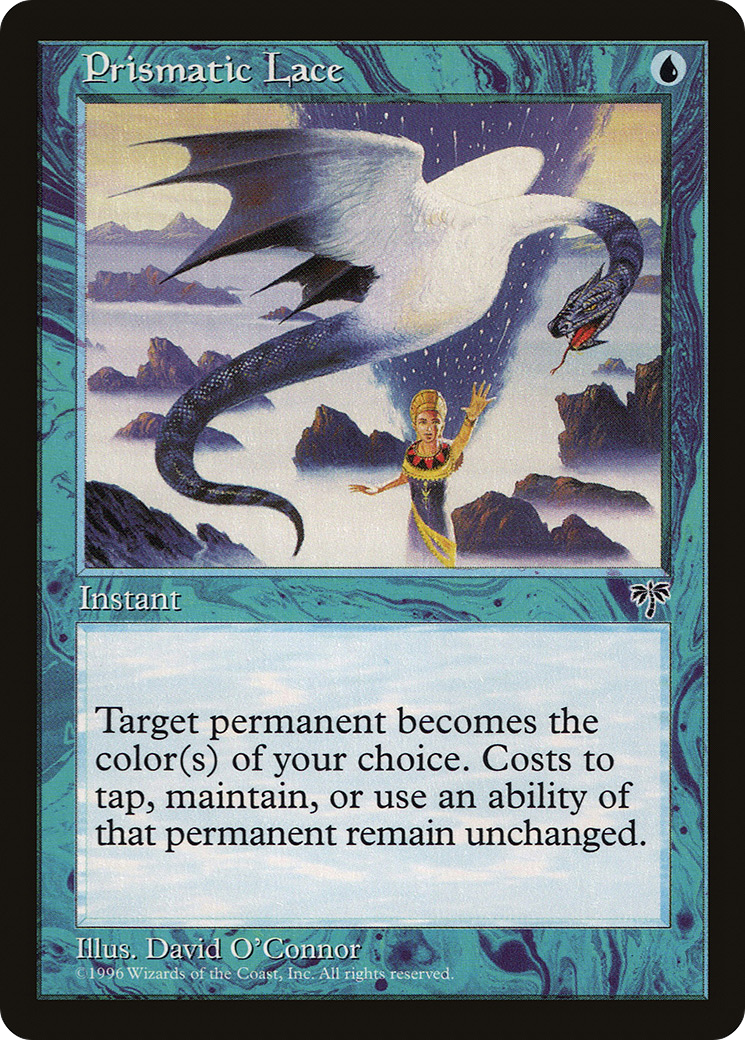
There’s a couple of cards out there that let you change the color (or colors) of your permanents. Of note, Prismatic Lace targeting any of your lands pretty much guarantees you full Vivid forever, and that means…
Oh, you have to exile cards of each color. You don’t just get five. I guess you get to look at five and then choose two, but… Man, that breaks my heart.
Tam, Mindful First-Year
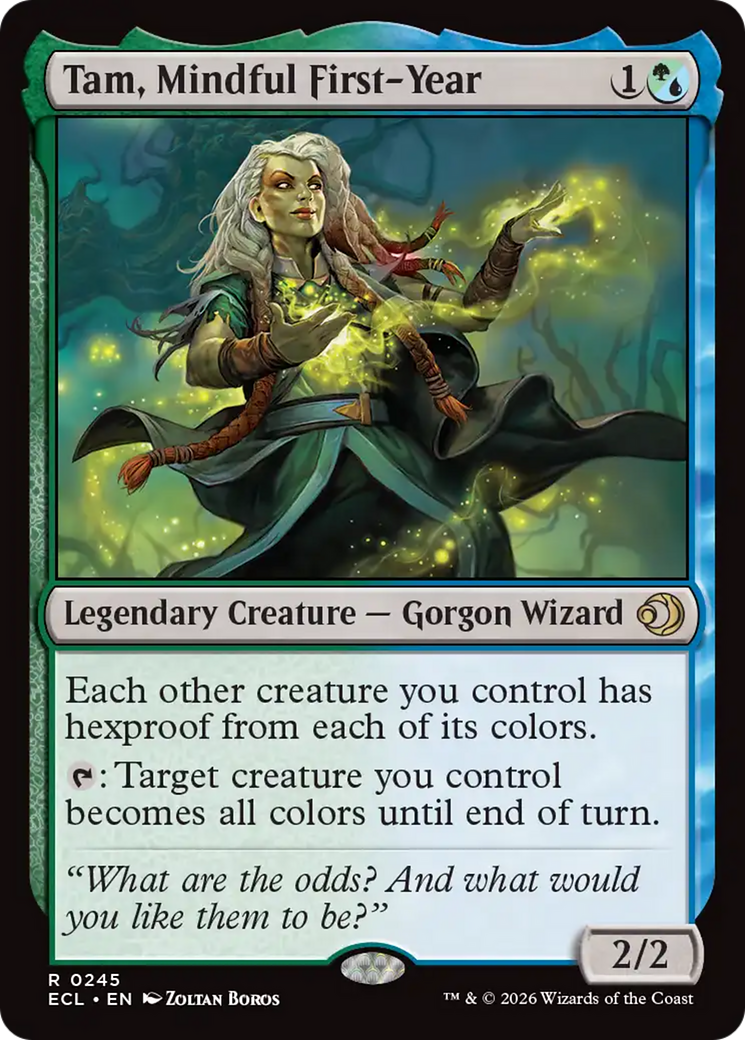
Hoo-wee! Tam, Mindful First-Year is the most important part of Mother of Runes attached to a unique Vivid enhancing effect.
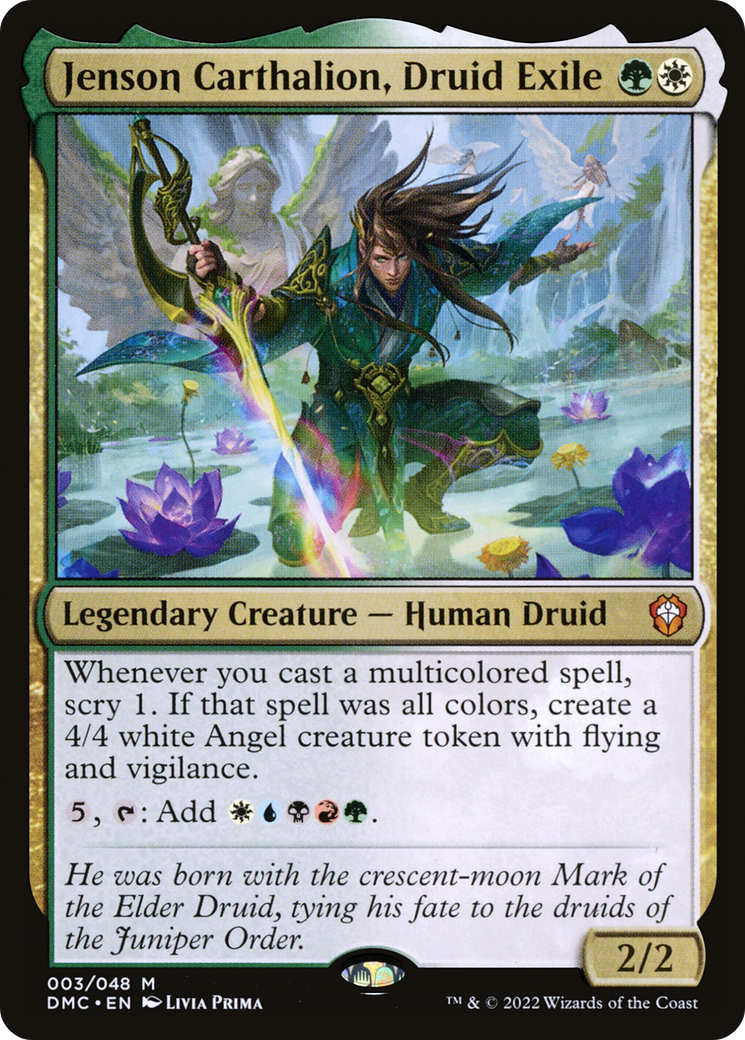
Unfortunately, without actual access to all five colors, you don’t have as many payoffs as, say, Jenson Carthalion, Druid Exile, so that just leaves… the Vivid support Wizards introduced in this very set (and like, Might of the Nephilim). Keep your eye on this one, I think she’ll be far more versatile in three to five years.
Jank Rank Eclipsed
My opinions on this set are mixed.
I don’t have any personal attachment to Lorwyn, the plane. I wasn’t playing when it came out. By the time I started, all of the mechanics it pioneered had become standard. This wasn’t my set to fall in love with. But seeing how successful the return to Kamigawa was when Neon Dynasty rolled around, I was optimistic that Wizards would top themselves.
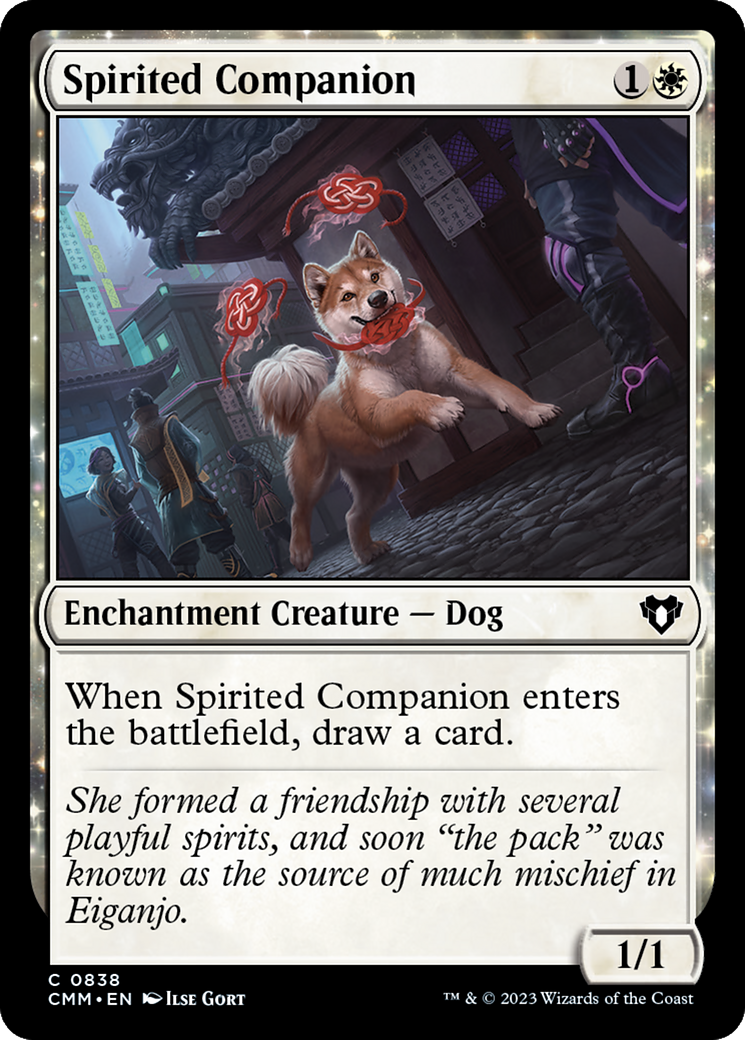
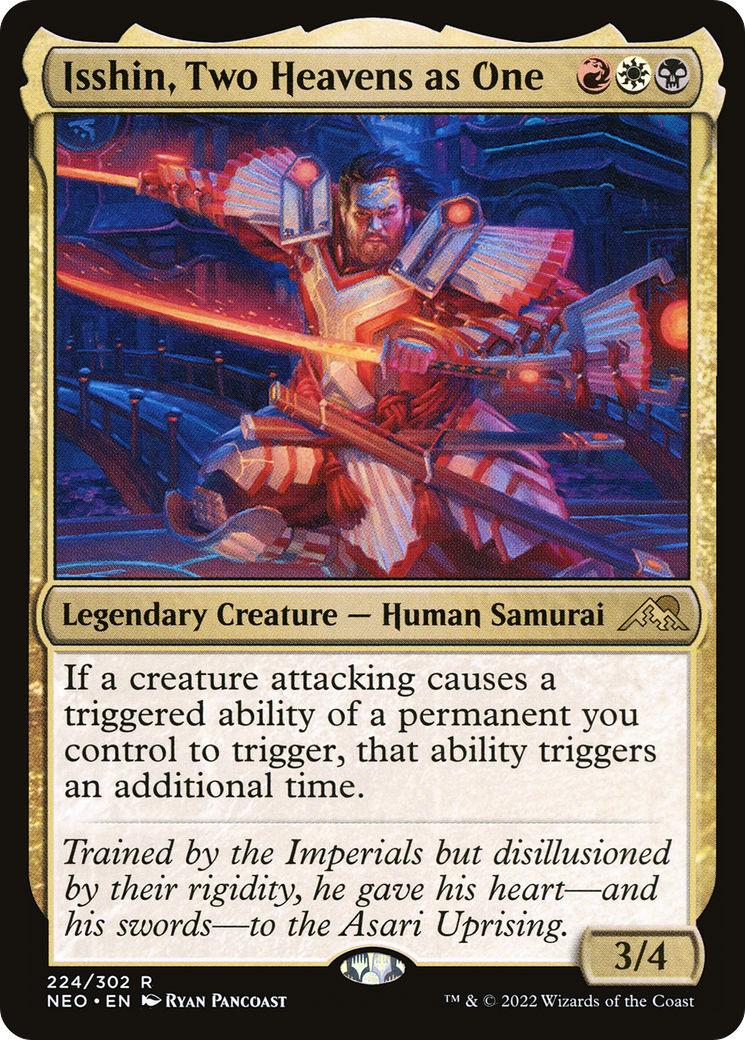
What I got was… fairly standard Magic. I have no doubt that these cards are good, and you can have fun with them, but that’s not thanks to Lorwyn Eclipsed; that’s thanks to Magic being fun in general. You can do novel things, but nothing too crazy; apparently, that’s being left to the Universes Beyond sets these days. I am disappointed.
But hey! The set might not be for me, but that doesn’t mean it’s not for you! If you like jank, come talk with me on my Discord! Talk with other likeminded folks about Magic, jank, and the weird ideas our brains come up with every single day. Hope to see you there!
Footnotes
-
I actually meet up with the other one-of-a-kind Elementals on a weekly basis, and let me tell you, the Divorce Elemental is having a rough go of it. ↩
-
A member of my Discord pointed out you can tap Brigid, Doun’s Mind for mana in response to the main phase trigger, and then flip back to Brigid, Clachan’s Heart to generate a token. You exchange one mana every turn for a token every other turn, which… probably won’t make a meaningful enough difference to be worth more than a footnote. ↩